.png)
The Tibialis Raise Deserves a Spot in Your Program

Lower-leg training has always leaned heavily on the calves, leaving the muscle on the front of the shin — the tibialis anterior — largely ignored. That's despite the fact that it's doing real work every time you walk, run, or absorb a step: it controls dorsiflexion and manages how the foot lowers to the ground during the eccentric phase of gait. Tibialis raises have picked up visibility lately, often framed as a trendy corrective exercise, and for once the hype is earning its keep. This isn't novelty for novelty's sake — it's a legitimate gap in most training programs finally getting addressed.
The tibialis anterior does more than most lifters realize. As the foot strikes the ground, it controls the rate of deceleration, which reduces impact forces and helps transfer force efficiently through the lower limb. It also stabilizes the ankle joint, particularly under rapid or repetitive movement. Despite that role, it's almost never trained directly — traditional lower-body programming is built around large muscle groups and heavy loading potential, and a smaller muscle with limited load capacity like the tibialis anterior just doesn't fit that model. It gets worked indirectly through general movement, but rarely targeted, which over time can create an imbalance between the front and back of the lower leg — one that may affect how forces distribute at the ankle as training volume climbs.
Tibialis raises fix that gap directly, loading the muscle through repeated dorsiflexion against resistance. It's a simple movement, but it introduces a stimulus most training programs are missing entirely: better eccentric control during foot contact, more tolerance for repetitive loading, improved ankle stability, and a healthier balance between the anterior and posterior lower leg. None of this shows up as a dramatic effect on its own — it's a quiet fix for something that's been neglected, not a breakthrough.
That neglect has real consequences. Shin discomfort, anterior compartment irritation, and other overuse patterns are commonly tied to repetitive loading outpacing tissue tolerance. No single exercise prevents injury outright, but building capacity in the tibialis anterior improves how the lower leg handles that stress — which matters most for anyone running or doing high volumes of conditioning, ramping up training load quickly, or switching footwear or surfaces. Even in programs built primarily around strength and hypertrophy, this still has a place: squats and lunges involve ankle dorsiflexion, but they don't meaningfully challenge the tibialis anterior on their own, so its development stays secondary unless it's trained directly. This isn't a replacement for compound lifts — it's what fills in around them.
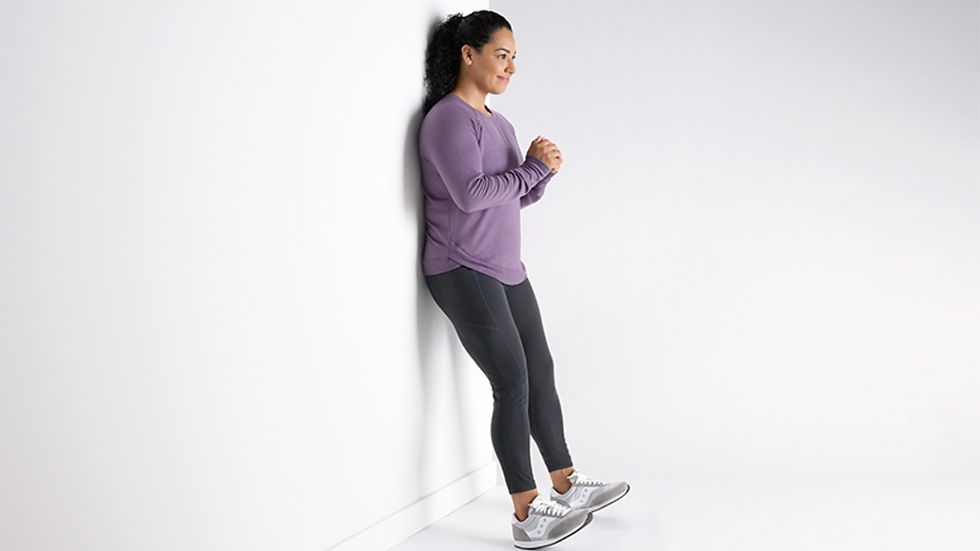
The movement itself is straightforward: the ankle moves from plantarflexion into dorsiflexion against resistance. The most common setup has you leaning back against a wall with heels on the ground, lifting the toes toward the shin and lowering under control. Alternatives include a dedicated tibialis machine, resistance bands, or simply holding a weight across the foot — the method matters less than keeping the movement controlled through a full range of motion rather than rushing the reps.
Because the tibialis anterior handles endurance and repetitive demand, it responds well to moderate-to-higher rep ranges — typically 12 to 20 reps with a controlled tempo — and can be trained more frequently than most accessory work since the systemic fatigue cost is low. It fits naturally at the end of a session, where it won't interfere with primary lifts, or as part of a warm-up for anyone who needs extra ankle activation. Progression comes from range of motion, control, or added resistance, not necessarily heavier loading.
It's worth keeping expectations realistic here too. Claims that tibialis raises prevent injury outright or dramatically boost performance don't hold up — this is a small, meaningful addition, not a breakthrough, and its value builds cumulatively rather than showing up overnight. And once a neglected muscle group gets attention, there's a natural pull to overcorrect. That's unnecessary here — a modest, consistent dose is enough to drive adaptation, and piling on extra volume just adds fatigue to a muscle that's already working throughout the day without producing better results.
The tibialis raise closes a real gap in how lower-leg training typically gets programmed. It won't replace your squats or your running volume, but it builds capacity in a part of the leg that's been doing unrewarded work all along — and it does that best with consistent, measured effort, not overcorrection.


Comments